First, the free one
If the house has a keypad on any door, change the code today. It costs nothing, takes two minutes, and the code you were handed has been through a builder, an agent, and everybody either of them let in over the months the house was on the market.
Do the garage keypad on the jamb as well if there is one, and while you are there, find out whether the lock keeps a working keyway. If it does not, that is worth knowing before the first flat battery rather than after.
This one gets first place because it is free and because it is the access route most new owners never think about.
Second, retire the metal
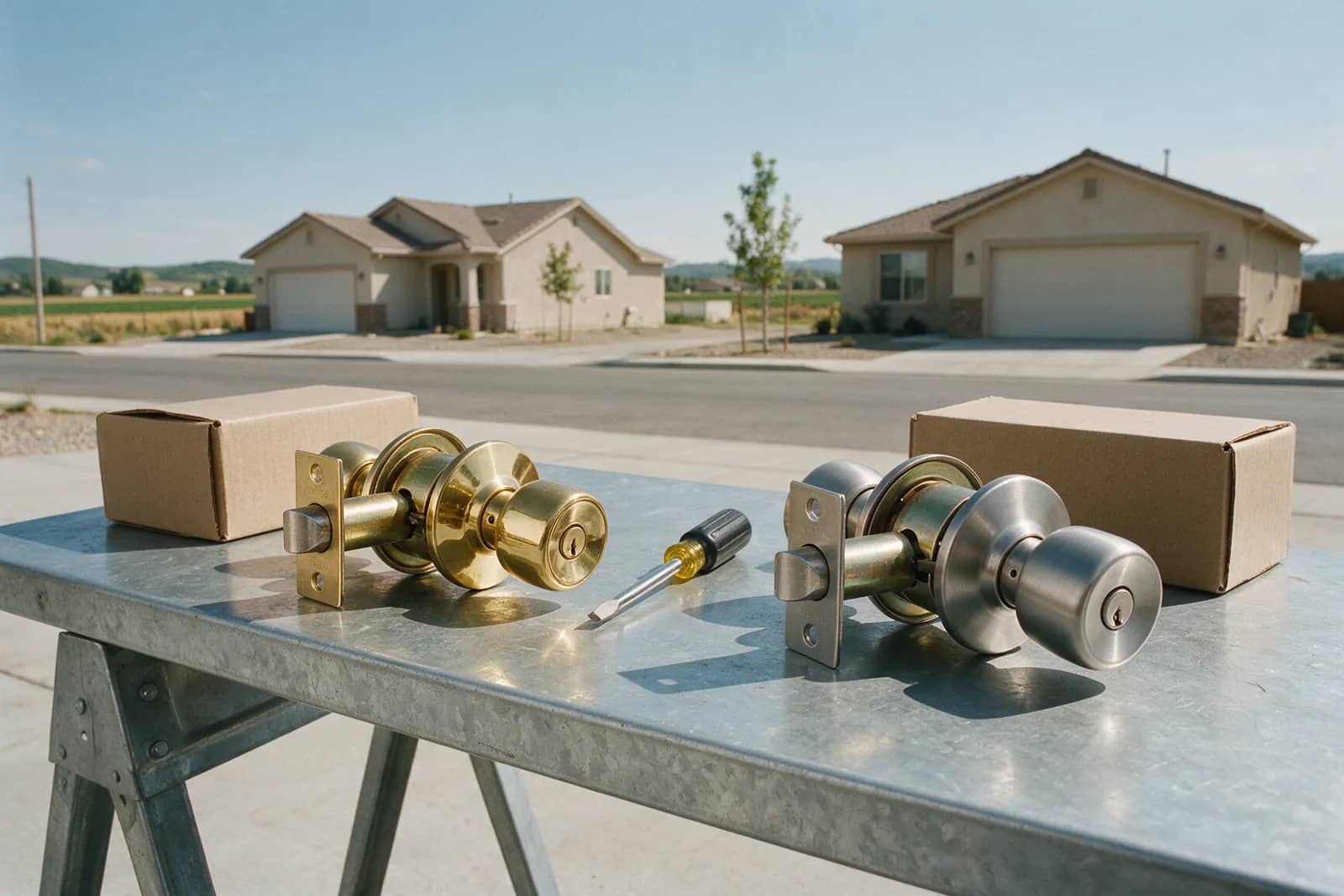
Rekey the locks so the keys from that same list stop working. It is $25 to $41 per cylinder, with the second and third at the low end because the van is already at your kerb, and it retires every key that exists without buying new hardware.
Bring the front door, the garage service door and the gate onto one key while it is being done. On a house where three owners have each added a lock, that is the difference between carrying a ring and carrying a key.
You do not need to replace anything to achieve this. If somebody quotes you new locks to get you a new key, they are selling hardware rather than solving the problem, and it is fair to say so.
Third, look at what only has a latch
On the newer builds on the west side, the front door has a proper deadbolt and the door from the garage into the house has a passage latch. That is the weakest lock on the property sitting behind the door that opens with a remote from the street.
On the older houses on the east side it is more often the back door or the door to a detached garage that never got one. Either way a proper deadbolt is $112 to $279 fitted, and it is the only recommendation on this site that gets made twice.
While you are at it, look at the strike on the front door. On a pre-war house it is frequently screwed into trim rather than framing, which means the frame gives before the lock does. Long screws into solid framing are part of a visit rather than a purchase.
What not to bother with in week one
High-security cylinders on every door. They are a real product with a real use, and on an ordinary house here the frame and the strike are the weak point long before the cylinder is. Money spent on the lock while the jamb is soft is money in the wrong place.
Replacing hardware that works. A knob set from 1948 on the east side is generally better made than what would replace it at the same price, and repinning it costs a fraction.
And do not let anyone bundle an alarm into a locksmith visit. Different trade, different decision, and it should be made on its own merits rather than at the end of a call-out while you are agreeing to other things.
Quick answers
Do I need to change the locks or just rekey?+
Rekey, unless a lock has actually failed. New pins mean every key handed through the sale stops working, which is the entire point, at $25 to $41 a cylinder instead of $112 to $279 for hardware you did not need.
The house came with a smart lock. Keep it?+
Usually yes, with two conditions: change the codes, and check it keeps a working keyway. If it has no key route at all, decide now whether you are comfortable with that, because the answer arrives on a cold morning otherwise.
Need it handled rather than read about?
(669) 356-8920